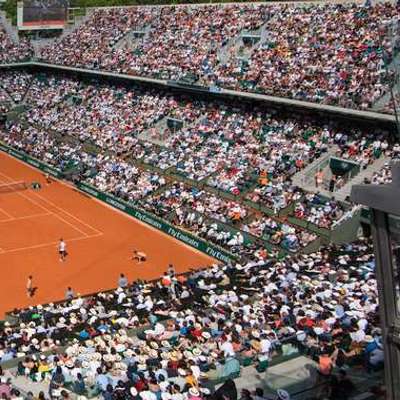
Stade Roland Garros : Un Joyau du Tennis Mondial
Le Stade Roland Garros, situé dans le 16ème arrondissement de Paris, est l'un des lieux les plus emblématiques du tennis mondial. Inauguré en 1928, il est principalement connu pour accueillir l'un des quatre tournois majeurs du tennis, les Internationaux de France, plus communément appelés Roland-Garros.
Le complexe, nommé en l'honneur de l'aviateur français Roland Garros, s'étend sur environ 8,5 hectares et comprend trois courts principaux : le Court Philippe-Chatrier, le Court Suzanne-Lenglen et le Court Simonne-Mathieu. Ces terrains sont célèbres pour leur surface en terre battue, une caractéristique qui distingue Roland-Garros des autres tournois du Grand Chelem et ajoute un niveau unique de stratégie et de physique au jeu.
Le Court Philippe-Chatrier, le principal court du stade, a subi une rénovation majeure, achevée en 2019, incluant l'ajout d'un toit rétractable. Cette modernisation a permis de continuer les matchs malgré les intempéries et a renforcé l'attractivité du stade. Le Court Suzanne-Lenglen, nommé en l'honneur de la légendaire joueuse française, est apprécié pour son ambiance dynamique et son design moderne. Le Court Simonne-Mathieu, entouré de serres de plantes rares, offre une expérience unique, fusionnant sport et nature.
Roland Garros est plus qu'un simple complexe sportif; il est un lieu de rencontre culturelle, attirant des fans du monde entier. Le tournoi est célèbre pour son atmosphère élégante et sa tradition, incarnée par la terre battue rouge, le champagne et les chapeaux de mode.
Le stade est également un acteur clé dans la communauté locale, proposant des programmes de formation et des événements tout au long de l'année. Avec sa riche histoire, son ambiance unique et son engagement envers l'excellence sportive, Roland Garros reste un pilier du tennis mondial.